
Quick answer
The Salkantay Trek is not technically dangerous — it requires no ropes, no scrambling and no glacier travel — but altitude makes it serious. The trail tops out at the Salkantay Pass, roughly 4,630 m, and altitude sickness is the leading cause of evacuation. The trailhead at Mollepata is open every day, 00:00–23:59, so is the salkantay trek dangerous depends far more on your acclimatisation than the calendar.
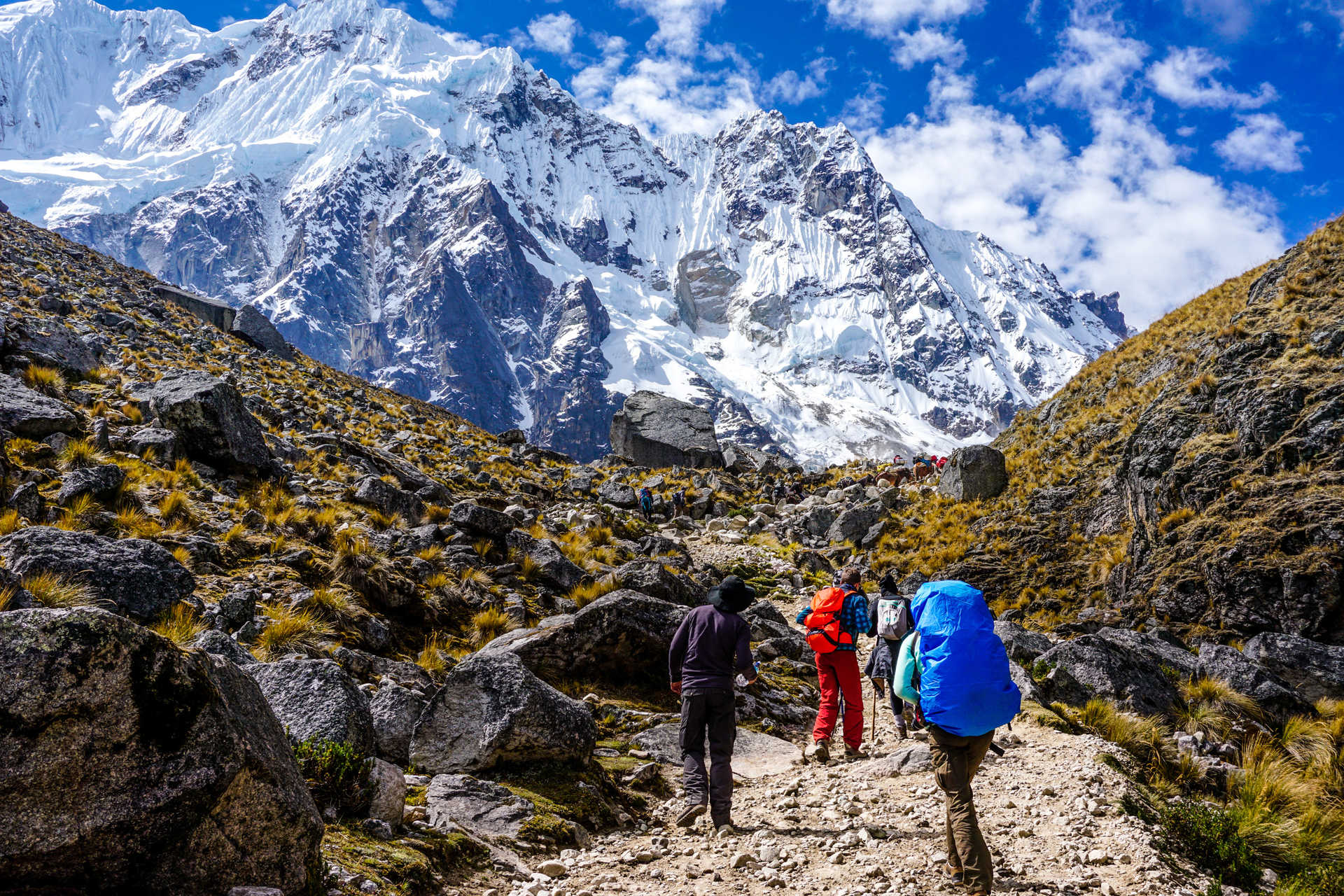
Salkantay is the highest peak in the Vilcabamba range, and the Quechua name translates roughly as "savage mountain" — a description that refers to its weather, not its trail. Trekkers do not climb the 6,271 m summit. They cross beneath it, over a saddle at approximately 4,630 m, then descend into cloud forest toward the Santa Teresa valley and, eventually, Aguas Calientes. That descent is the route's defining feature: roughly 3,000 metres of elevation shed over a few days. Anyone asking is the salkantay trek dangerous is usually picturing exposure and cliffs, when the honest hazards are hypoxia, dehydration and knees. The context that makes the answer sensible is the profile of the trail itself. Most operators run the classic route in five days from Mollepata, which means gaining serious altitude on day one and crossing the pass on day two. Bodies arriving from Cusco with only a night or two of acclimatisation are still adapting when they meet the thinnest air of the trip. Headache, nausea and sleeplessness at Soraypampa are common; genuine acute mountain sickness is less common but real, and the standard response is descent, not endurance. The Salkantay Trek difficulty rating that appears on most itineraries — moderate to challenging — is accurate, but it measures aerobic load and daily distance, not technical risk. The secondary hazards are mundane and manageable. Sections of the Santa Teresa valley road have seen landslides in heavy rain. River crossings on footbridges are routine but slippery. The high-altitude Salkantay Pass holds snow and wind well outside winter, and visibility can close in within minutes. The community conservation fee is collected at the trailhead, and the trail itself has no gate, no queue and no closing hour — the Mollepata approach is accessible around the clock, which is why an early departure matters more than a booking slot. What to do with this answer: treat altitude as the variable you control. Spend nights in Cusco before the first ascent, drink more water than feels necessary, and walk the first day slowly enough to hold a conversation. Trekkers who move with a guided group gain a decisive advantage — horses, radio contact and someone who recognises trouble early. Reduced to a sentence, is the salkantay trek dangerous has a plain answer: not for a prepared, acclimatised walker, and considerably so for an unacclimatised one in a hurry.
“Trekkers do not climb Salkantay. They cross beneath it — and the danger is not the mountain, it is the speed of the approach.”
Is The Salkantay Trek Dangerous? Separating Myths From Real Risks
The Salkantay Trek is often perceived as dangerous due to its remote nature and high elevation. Most safety concerns stem from a lack of physical preparation rather than inherent trail hazards.
MythThe trail has dangerous, unprotected cliff edges everywhere.
FactThe path is well-established, and while some sections involve steep terrain, they do not require technical climbing skills or equipment.
MythThe trek is too dangerous for anyone except professional athletes.
FactConsistent physical conditioning and proper acclimatization are sufficient for most hikers to complete the route safely.
MythYou are at constant risk of severe altitude sickness throughout the entire trek.
FactAltitude sickness risk is highest during the high pass, which is mitigated by proper pacing and following local arrival recommendations.
Mistakes To Avoid So The Salkantay Trek Is Not Dangerous
Most trouble on the Salkantay route comes from avoidable planning errors rather than the terrain itself. These are the errors that turn a demanding hike into a genuine hazard.
Arriving in Cusco and starting the trek within a day
Spend at least two full days in Cusco (3,400 m) before departure, and use them for gentle walking rather than rest alone. Altitude sickness on the approach to the 4,630 m pass is the single most common reason trekkers are evacuated.
Starting the first day late from Mollepata
Aim to be at the trailhead between 05:00 and 08:00. Early starts avoid afternoon heat and give better visibility for the high-altitude pass, when cloud and wind build after midday.
Pushing over Salkantay Pass despite guide weather warnings
If your guide calls a delay or reroute because of storms, snow or lightning risk, accept it. The pass is exposed with no shelter and no quick descent option.
Treating it as an easy walk needing no training
Build up to consecutive days of 6-8 hours walking with elevation gain in the months beforehand. Fatigue causes most falls on the steep descent toward the cloud forest.
Hiking alone or drifting far ahead of the group
Stay within sight of your guide and group. Sections of the route have no phone signal, and solo trekkers who fall or develop altitude symptoms may wait hours for help.
Ignoring early headache, nausea or breathlessness
Report symptoms to your guide immediately rather than waiting for the next camp. Descending early is straightforward; a serious case above the pass is not.
When Is The Salkantay Trek Dangerous Due To Seasonal Weather?
The dry season, spanning May to September, offers the most stable conditions for the Salkantay Trek. During this period, clear skies and firm trail surfaces significantly reduce the risks associated with high-altitude hiking.
Dry Season (May–September)
Low to moderate levelsStable, clear; 5°C to 20°C
Expect minimal precipitation and high visibility, which simplifies navigation of the mountain pass.
Rainy Season (November–March)
Low levelsHigh precipitation; 8°C to 18°C
Increased risk of landslides and muddy, unstable terrain creates significant safety hazards.
Daily Windows (All Seasons)
Dependent on start timeVariable; follows seasonal trends
Aim for the best arrival window of 05:00–08:00 to avoid afternoon heat and ensure safe passage.
Verdict: For the safest conditions, plan your trek during the dry months of May, June, or July and maintain a daily start between 05:00 and 08:00.
Essential Preparation So The Salkantay Trek Is Not Dangerous
Most of the risk on the Salkantay Trek is managed before you reach Mollepata, through conditioning, medical clearance, and gear that handles a 4,600 m pass.
-
Start cardio training three months ahead — Sustained hill walking with a loaded pack builds the endurance the pass demands.
-
Get a doctor's clearance for altitude — Heart, lung, and blood pressure conditions behave differently above 4,000 m.
-
Discuss altitude medication with your physician — Acetazolamide and its contraindications should be settled at home, not at the trailhead.
-
Book Cusco time for acclimatisation — Several days near 3,400 m before departure lowers your altitude sickness risk.
-
Pack a waterproof shell and insulation — Temperatures at the high camp fall below freezing while the lower jungle stays humid.
-
Break in sturdy boots beforehand — Wet, rocky descents cause most ankle injuries and blisters on this route.
-
Carry your ID and 20 PEN — The community conservation fee is collected per person at the trailhead.
-
Confirm the operator's emergency plan — Ask about oxygen, first aid training, and evacuation before you commit.
Opening Hours for Accessing the Salkantay Trek Trailhead
The Salkantay Trek trailhead in Mollepata is accessible daily. Travelers are advised to plan their arrival within the recommended morning window to ensure optimal trail conditions.
| Monday | 00:00–23:59 | |
|---|---|---|
| Tuesday | 00:00–23:59 | |
| Wednesday | 00:00–23:59 | |
| Thursday | 00:00–23:59 | |
| Friday | 00:00–23:59 | |
| Saturday | 00:00–23:59 | |
| Sunday | 00:00–23:59 |
Check availability
Safety and Logistics FAQs for the Salkantay Trek
Everything you need to know about is the salkantay trek dangerous